Recently, long-term interest rates have gone up, even though the Federal Reserve (Fed) has lowered rates. This might seem confusing at first. The 10-year U.S. Treasury yield, an important measure of long-term interest rates, has increased from 3.62% to as high as 4.38%. This is happening because the economy is doing well and people expect inflation around the upcoming election. These factors push longer-term rates higher. Interest rates have been changing a lot over the past few years, often without warning. Let's explore how these uncertain interest rates might affect investors like you. The economy is growing steadily
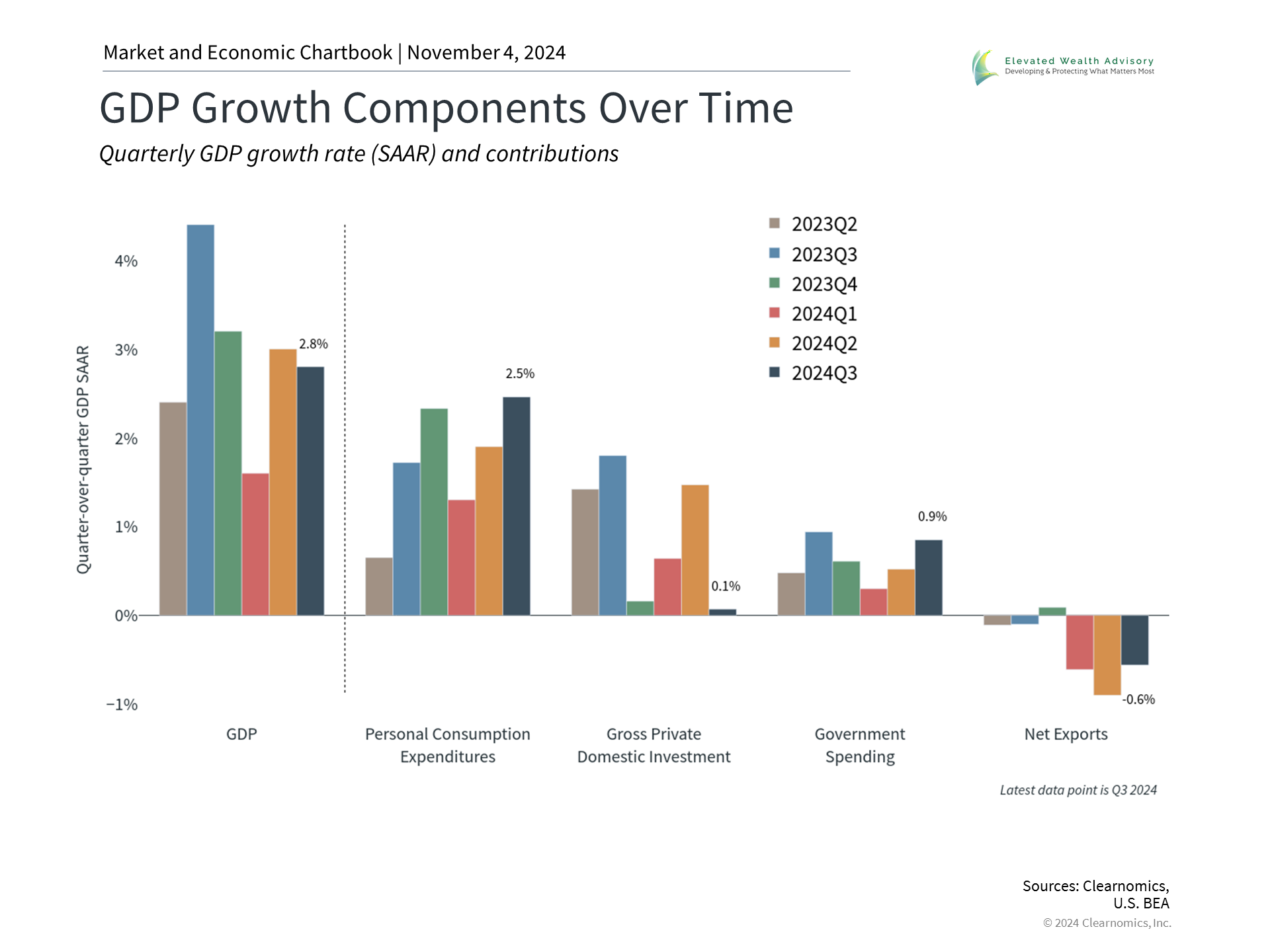
Interest rates affect many parts of our lives. When you borrow money, higher interest rates mean you pay more for things like mortgages, credit cards, and car loans. Many people were surprised when borrowing costs suddenly increased in 2022, after years of very low rates. On the bright side, higher interest rates can mean you earn more from your savings accounts, bonds, and other investments. For the bigger picture, higher interest rates can make it more expensive for businesses to borrow money. This might slow down hiring and growth plans. For the stock market, higher rates can make future profits less valuable today, which can lower stock prices. Higher rates can also make existing bonds worth less, because new bonds will offer better returns. So, as an investor, changes in interest rates can affect your investments in many ways. What's causing rates to change now? While the Fed controls short-term rates, long-term rates depend more on how the economy is doing. Recent reports show the economy is still growing steadily. From July to September, the economy grew by 2.8%. This was a bit less than expected, but people are still spending a lot of money. Some experts worry this might change as people use up their savings and borrow more. Recent job reports have been mixed. In September, 254,000 new jobs were created, which was a lot more than expected. This is one reason why interest rates started to go up. A strong job market means the Fed might not need to lower rates as quickly to help the economy. In other words, the economy might be doing well even with higher interest rates. Job growth has slowed down from its previous rapid pace
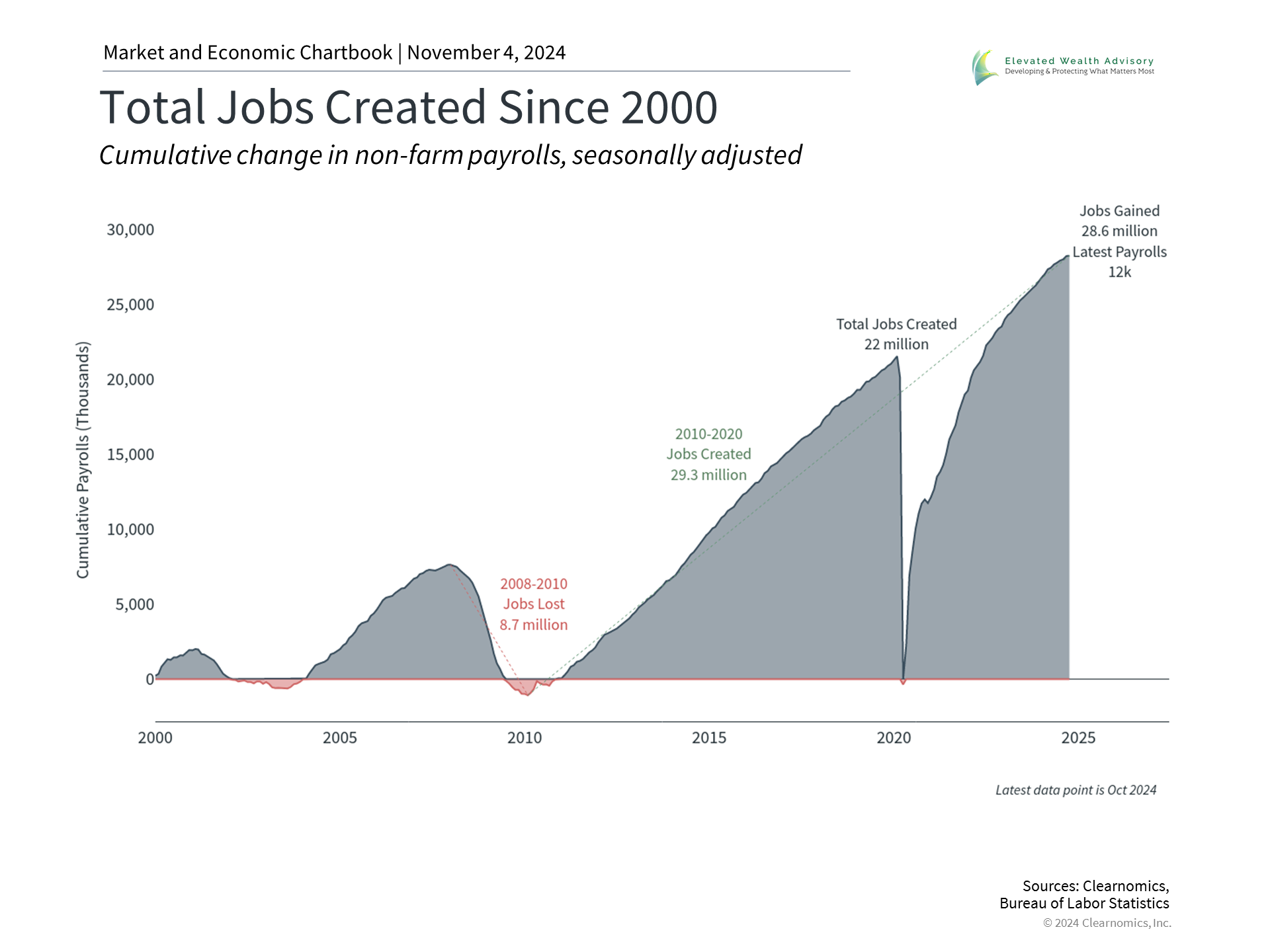
However, the latest job report for October shows only 12,000 new jobs were added. This is the lowest number since 2020. The September number was also lowered to 223,000. Some reasons for this low number might be strikes by factory workers and hurricanes in Florida. But it's hard to know exactly how much these events affected the numbers. Because of this uncertainty, the market didn't react too strongly to this one report. These job numbers are important because they help the Fed make decisions. As inflation (the rise in prices) slows down, how many jobs are being created becomes more important for everyday people. Even though the recent job report wasn't great, the job market has been very strong overall. The economy has added 2.2 million new jobs in the past year, and only 4.1% of people are unemployed. So even if things slow down a bit, we're starting from a very good place. It's actually normal for long-term interest rates to go up when the economy is doing well, even if the Fed is lowering short-term rates. This often happens at the beginning of new economic cycles. We don't know if this pattern will continue, but investors shouldn't worry too much about it. Bonds are still helpful for your investment portfolio, even with higher interest rates
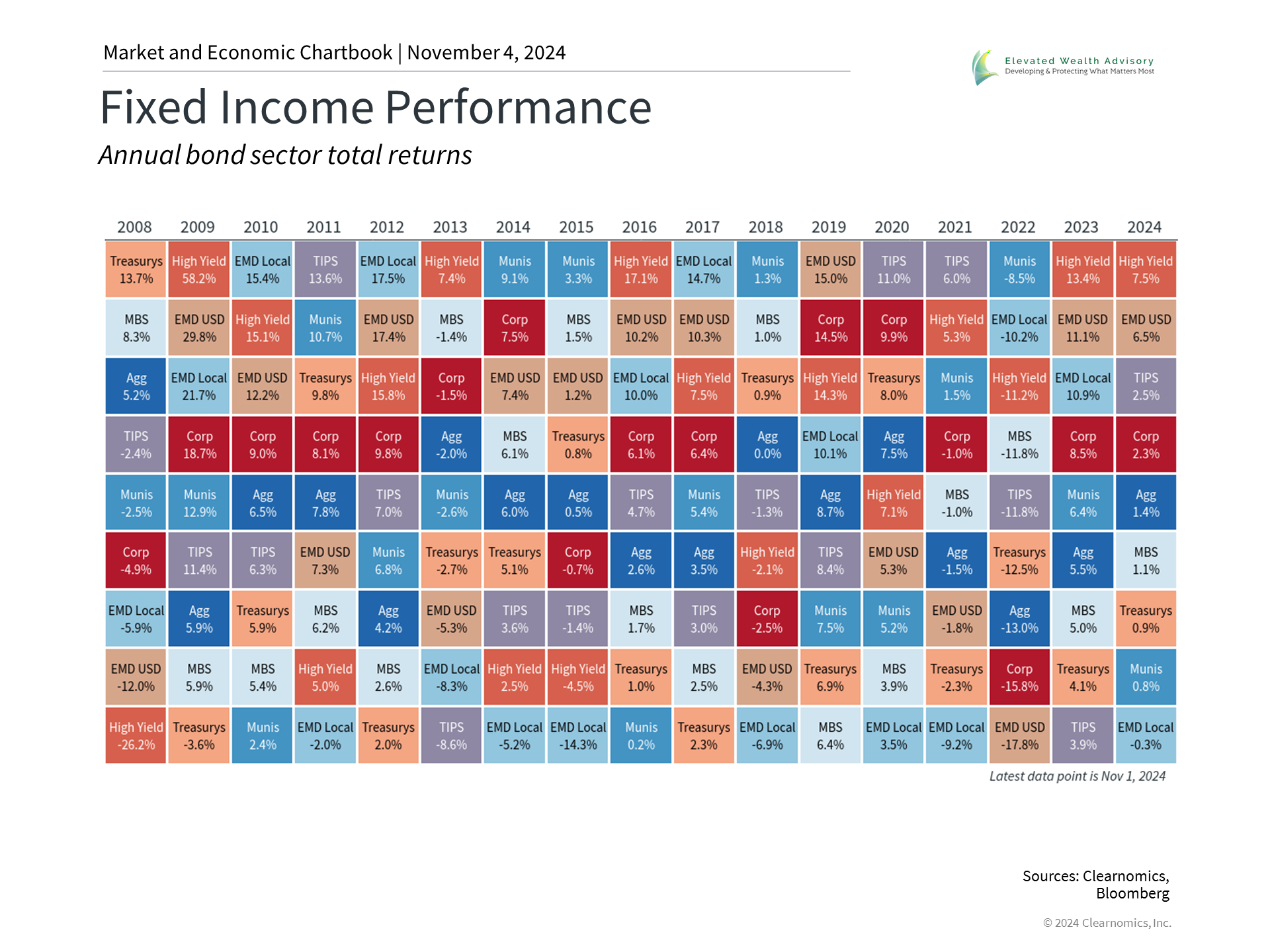
Changing interest rates have affected bond prices. A measure of the overall bond market (the Bloomberg U.S. Aggregate index) has only gained 1.4% this year. Different types of bonds have had different results, from a 7.5% gain for high-risk bonds to only 0.8% for municipal bonds. When interest rates go up, older bonds become less valuable because new bonds offer better returns. These changes have happened several times this year as the market adjusts to different economic trends. However, many bonds are now offering better returns than they have in a long time. U.S. Treasury bonds are offering 4.3% returns, which is much higher than the 2.0% average since 2009. Investment grade corporate bonds are offering 5.2% returns. For all investors, bonds are still important. They help balance out your investments during uncertain times and provide regular income. As the chart shows, different types of bonds can perform very differently from year to year. While we don't know exactly where interest rates will go next, it's important to think long-term. It's a good idea to spread your investments across different types of bonds to help manage market ups and downs. The bottom line? Recent economic news, including a disappointing jobs report, might affect how the Fed changes interest rates. Try not to worry too much about one piece of news. Instead, spread out your investments and focus on your long-term goals. | |||
Securities and investment advisory services offered through Osaic Wealth, Inc. member FINRA/SIPC. Osaic Wealth, Inc. is separately owned and other entities and/or marketing names, products or services referenced here are independent of Osaic Wealth, Inc. Copyright (c) 2024 Clearnomics, Inc. All rights reserved. The information contained herein has been obtained from sources believed to be reliable, but is not necessarily complete and its accuracy cannot be guaranteed. No representation or warranty, express or implied, is made as to the fairness, accuracy, completeness, or correctness of the information and opinions contained herein. The views and the other information provided are subject to change without notice. All reports posted on or via www.clearnomics.com or any affiliated websites, applications, or services are issued without regard to the specific investment objectives, financial situation, or particular needs of any specific recipient and are not to be construed as a solicitation or an offer to buy or sell any securities or related financial instruments. Past performance is not necessarily a guide to future results. Company fundamentals and earnings may be mentioned occasionally, but should not be construed as a recommendation to buy, sell, or hold the company's stock. Predictions, forecasts, and estimates for any and all markets should not be construed as recommendations to buy, sell, or hold any security--including mutual funds, futures contracts, and exchange traded funds, or any similar instruments. The text, images, and other materials contained or displayed in this report are proprietary to Clearnomics, Inc. and constitute valuable intellectual property. All unauthorized reproduction or other use of material from Clearnomics, Inc. shall be deemed willful infringement(s) of this copyright and other proprietary and intellectual property rights, including but not limited to, rights of privacy. Clearnomics, Inc. expressly reserves all rights in connection with its intellectual property, including without limitation the right to block the transfer of its products and services and/or to track usage thereof, through electronic tracking technology, and all other lawful means, now known or hereafter devised. Clearnomics, Inc. reserves the right, without further notice, to pursue to the fullest extent allowed by the law any and all criminal and civil remedies for the violation of its rights. |

Understanding Interest Rates: What Recent Changes Mean for Everyday Investors